Property and homes
Describe useful events, such as a parcel left at a doorway, instead of generic motion alerts.
AI Vision / DEVELOPMENT CONCEPT
A camera that understands what is happening, not just records it.
A connected camera concept that translates footage into understandable events and relevant actions for property, hospitality and everyday environments.
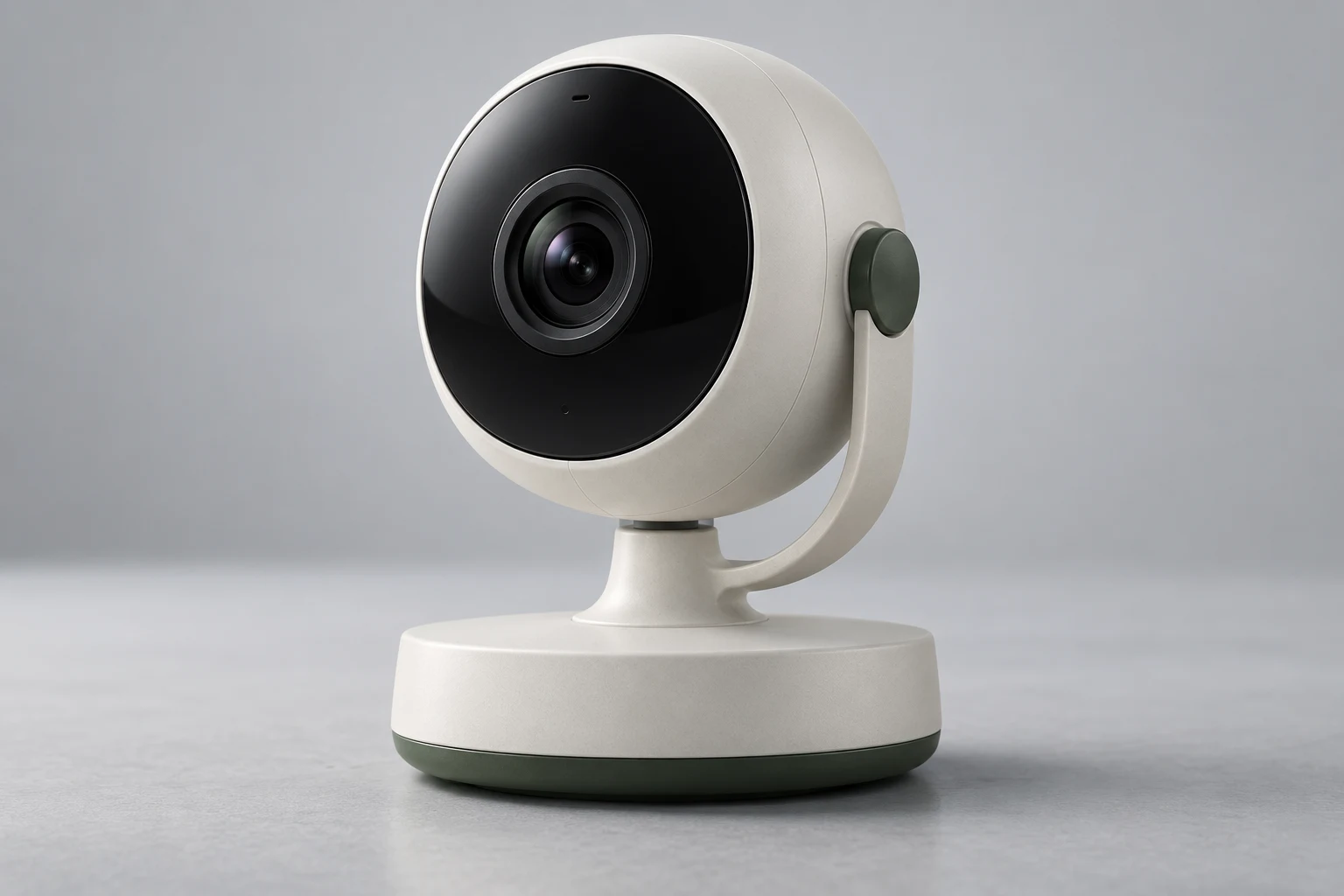
Illustrative design concept. Final design is project-specific.
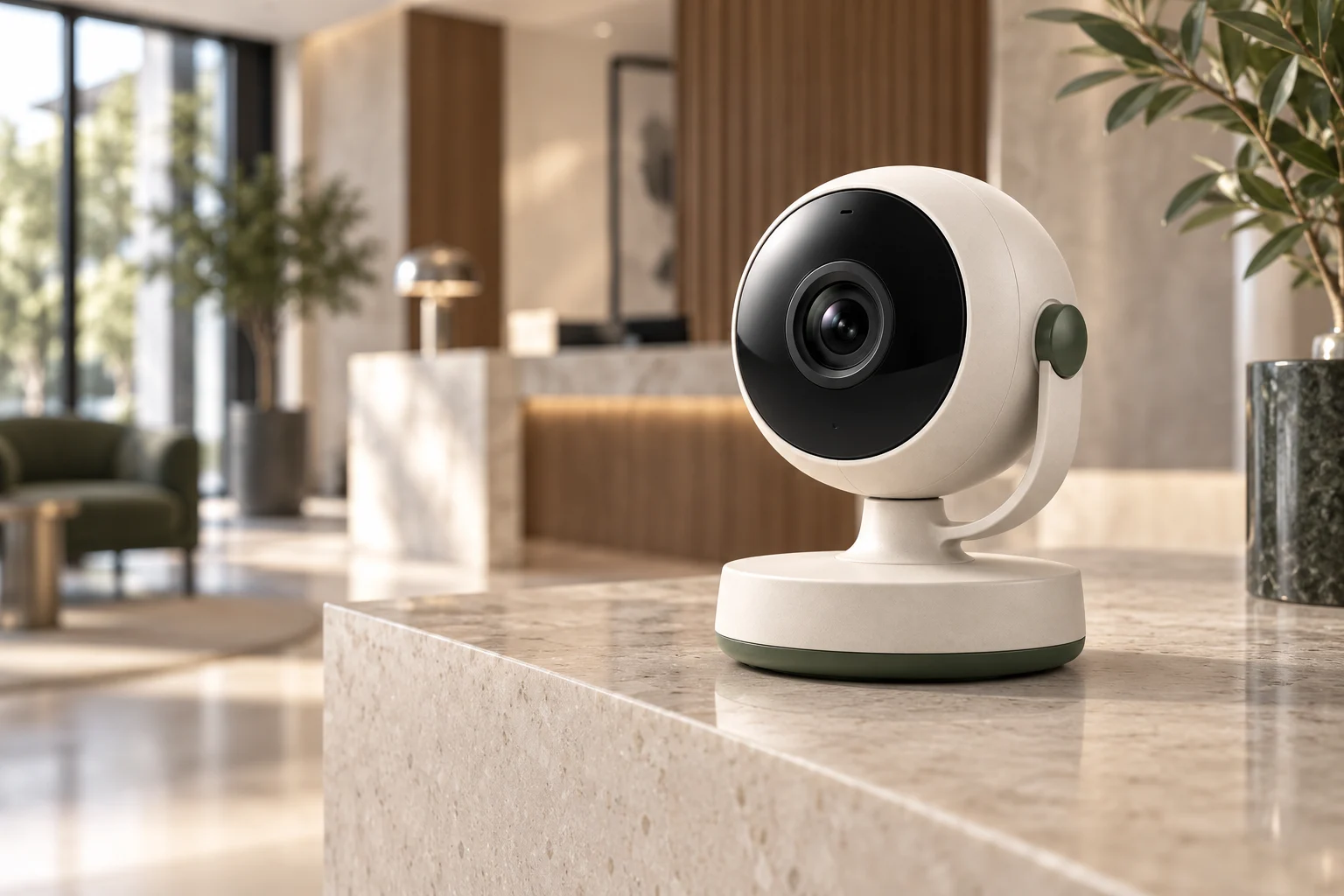
IN THE ENVIRONMENT
Start with the event a person needs to understand. Then define the lens, detection, interpretation and notification experience around it.
Start a ProjectUSE CASES
Describe useful events, such as a parcel left at a doorway, instead of generic motion alerts.
Explore unusual-activity notifications and event search tailored to a clearly defined environment.
Surface operational events, such as an unattended customer queue, for a timely response.
KEY CAPABILITIES
Person, pet, vehicle and object detection with natural-language event descriptions.
Search recorded events in everyday language and investigate relevant activity on an event timeline.
Evaluate edge detection with cloud interpretation against latency, cost and privacy requirements.
Two-way audio, privacy zones, recording schedules, configurable storage and user-access controls.
Proposed capability scope. Performance, language support, battery life and integration availability require platform selection and validation.
TECHNICAL SOLUTION / AI VISION
A working architecture to evaluate with the selected ODM. Components, specifications and integration scope are confirmed through development.
Hardware platform
Image sensor, lens, processor, microphone / speaker and storage. Assess Wi-Fi and optional Ethernet / PoE variants.
Connectivity & firmware
Documented stream access, edge-AI support, configurable cloud endpoints and dependable OTA updates.
AI & application
Detection, event descriptions, natural-language search and alerts, with privacy zones and access controls.
Validation focus
Low-light quality, detection accuracy, false alerts, latency, connectivity and inference cost.
Use-case definition, product brief, platform assessment, partner coordination and development gates.
Scoped engineering, firmware and app work, prototypes, test evidence and manufacturing.
Brand direction, commercial priorities, approvals, data ownership and launch responsibilities.
DES DEVELOPMENT APPROACH
Choose a single launch environment and define the events, false-alert tolerance and data requirements.
Select an IPC platform with SDK and stream access; integrate event interpretation and the app experience.
Test image quality, low-light performance, alert accuracy, connectivity and update reliability in a field pilot.
ODM / MANUFACTURING CAPABILITY
We assess development partners against the capabilities this concept needs.
Development gate
A solution partner can support firmware, AI integration and lifecycle updates as well as hardware production.
YOUR NEXT PRODUCT STARTS WITH A CLEAR BRIEF
Define the right use case. Build the right hardware.